
Why your clean laundry still smells musty — and how to stop it
7 min read
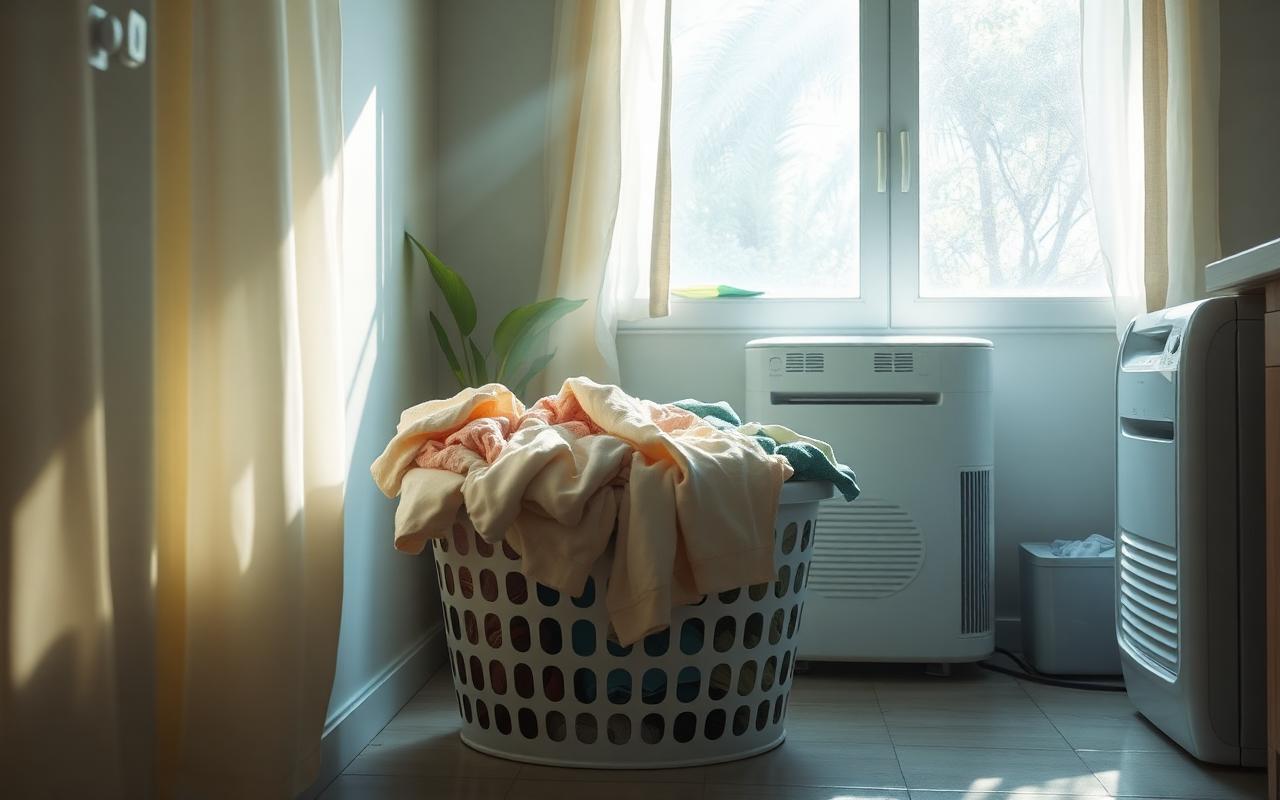
It is one of the most common complaints we hear at the counter, and it is almost never a detergent problem. Clothes wash clean, go into a drawer, and within a couple of days carry a faint mildew smell that gets stronger the moment you sweat in them. In South Florida this is a humidity problem with four specific causes — and all four are fixable.
What that smell actually is
Mildew odor in fabric is produced by bacteria and mold feeding on two things: moisture and organic residue. The residue is body oil, skin cells and leftover detergent trapped in the fibers. The moisture, in Broward County, is simply the air. Our average relative humidity sits between 70 and 80 percent for most of the year, and fabric will happily pull water out of air at that level.
So the smell is not a sign that your clothes are dirty. It is a sign that something in the fiber is feeding organisms that are getting all the water they need for free.
Cause 1: too much detergent
This is the biggest one and the most counterintuitive. Most people use two to three times the detergent they need. Excess detergent does not rinse out — it stays in the fabric as a soft, slightly sticky film that traps body oil and holds moisture. That film is a food source.
Cut your detergent to roughly half what the cap suggests, especially in a high-efficiency machine. If your towels have gradually stopped absorbing water, that is detergent build-up too, and it is the same underlying cause.
Cause 2: the load sat wet
Thirty minutes is the outside limit for wet laundry sitting in a drum in this climate. Bacteria colonize wet fabric fast when the ambient temperature is 80 degrees. Once that has happened, the smell is in the fiber and a normal rewash will not remove it — you will just get a clean-smelling load that goes sour again in two days.
If a load has sat overnight, it needs a rewash with a cup of white vinegar in place of detergent, then a normal wash cycle after that. Vinegar breaks down the biofilm; detergent alone does not.
Cause 3: it was not fully dry
This is where Florida differs from almost everywhere else. Clothes that feel dry to the touch are frequently not dry inside seams, waistbands, pockets and towel hems. In a dry climate that residual moisture evaporates in the drawer. Here it does not — the surrounding air is already saturated, so it just sits there.
Give every load an extra ten minutes beyond the point where it feels done, and check the thick parts by hand: waistbands, double-stitched seams, the hem of a towel, the collar band of a shirt. Those are the places mildew starts.
Cause 4: the washing machine itself
Front-loading home machines are notorious for this. Detergent and softener residue collects in the door gasket and the dispenser drawer, mold grows in it, and every load afterwards picks up the smell on the way through. If your machine smells when you open it empty, that is your source and nothing you wash in it will come out fresh.
- Wipe the door gasket dry after the last load of the day and leave the door open.
- Pull out and rinse the detergent drawer weekly.
- Run an empty hot cycle with two cups of white vinegar once a month.
- Stop using liquid fabric softener — it is the main contributor to gasket build-up and it coats fibers in a way that reduces absorbency.
Fixing laundry that already smells
- 1Wash on the hottest setting the care label allows, with one cup of white vinegar and no detergent.
- 2Run a second cycle with your normal detergent — half the usual amount.
- 3Dry completely, then give it ten more minutes.
- 4For stubborn towels, add half a cup of baking soda to the second wash. Vinegar and baking soda work on this, just not in the same cycle.
Habits that keep it from coming back
- Move laundry to the dryer within 30 minutes, every time.
- Never fold or put away anything that feels even slightly cool to the touch.
- Store clothing with an inch of air between items rather than packed tight.
- Keep a dehumidifier or a moisture absorber in a closet that sits against an exterior wall.
- Wash gym clothes and swimwear the same day. Synthetics hold odor-causing bacteria far more stubbornly than cotton.
None of this is complicated, but it is climate-specific — laundry advice written for a dry state simply does not account for air that is 78 percent water most of the year.